 |
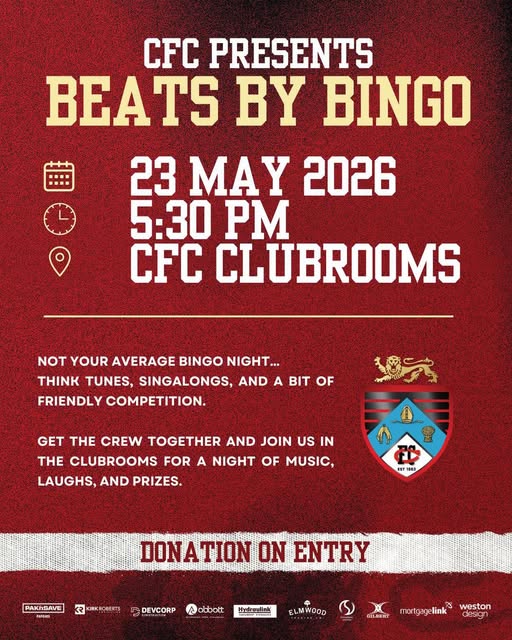
Welcome! Welcome to the 20 May update from Christchurch Football Club, keeping you connected with all the awesome events and happenings in and around the club. This weekend kicks off with Beats for Bingo. So come on down, bring a friend or two and join in the fun!  |
 |
 |
The only Easy Day was yesterday! Growth never comes from comfort. Yesterday might have felt easier, but it gives you a new chance to push your limits, strengthen your mindset, and prove who you really are. Every challenge you face is shaping you into someone tougher, sharper, and more focused. |
|

As I complete tasks around the complex ranging from vacuuming, to shifting tables & chairs, to working with people on site, to answering many requests and questions (rugby & business related) and most importantly looking after my awesome team (Budgie, Allana, Katrina, Roger, Annie, Morne & his team along with Edward & his team) I still have time to think how I can be more tougher, sharper & focused by moving forward. I am the first to admit I will make mistakes, but I strongly believe once I have admitted to my mistake it is what I do next that counts. Over the past couple of weeks I have been informed that I didn’t get things right for two of our wonderful sponsors and I have sincerely apologized for the oversights and will be taking action to rectify the errors made. |
|

The intent of my team is to be the best that we can be and provide as much support to everyone we interact with as we want to earn your TRUST & RESPECT by living up to our own team values and personal standards |
|
Again if have any questions please contact accounts@christchurchpark.co.nz in the first instance. Senior Div. 1-6 & Women’s $240.00 Colts and any Under 21 player $160.00 General $50.00 Social $20.00 Junior Family Member – 1 player (first child in the family) $115* includes team photo payment 2 or more players (same family) payment $230* includes team photo payment 3 or more players (same family) $300* includes team photo payment *includes a Family Membership of $60 As mentioned all Coaches & Managers of all teams will be following up to ensure all subscriptions are paid by either the end of May (Senior) or the end of June (Juniors). |
|

|

A big shout out to Craig from our Junior Committee who completed back to back games as referee on Saturday here at Christchurch Park – outstanding work! Also to Craig and his daughter who helped me the previous week in bringing in the gear from grounds 2 & 3 post the junior games – appreciate your work team 😊 Compliance matters: Only staff employed by the Christchurch Football Club can go behind the bar and/or into the kitchen. We have now installed a very expensive AV system with Bluetooth microphones, and we must protect the system & the equipment, so we don’t want people simply wandering behind the bar and playing around with the system! Please ask the bar staff for assistance regarding the AV system as they are there to help. With regards to ordering alcohol for team purposes e.g., crates only those with the approved delegated level of authority, Chairman, GM, RDM and Club Captain, can authorize putting alcohol on the nominated bar tab and these people must be onsite e.g., cannot delegate their authority to another person when not in the clubrooms Again I want to reiterate that our liquor license does not allow alcohol to brought into Christchurch Park – final warning! It is disappointing that four times on Saturday our bar team had to remove alcohol from members where the alcohol was clearly bought offsite. This infringement will cost the club its liquor license and ability to operate if an inspection occurs or a complaint is made as well as seeing the liquor license held by the Bar Manager on duty at the time suspended/cancelled and this will then affect their ability to earn an income. |
|

 |
|


How Deep is Deep and How Much Detail is Detail? When coaching junior rugby, one of the hardest things to understand is how much information players need. As coaches, we often want to teach everything we know. We want sessions to look professional, detailed, and advanced. But junior coaching is not about showing how much rugby we know — it is about helping young players learn, enjoy the game, and coming back next season wanting more. Every player learns differently. Every team has different personalities, abilities, confidence levels, and experiences. Some players will pick up a skill immediately. Others may need weeks of repetition before it clicks. Some will love contact and competition, while others are still learning how to hold a ball correctly or where to stand. As volunteer coaches, we do not get to select who turns up to training — and that is the beauty of community rugby. One Size Does Not Fit All A session that works brilliantly for one team may completely miss the mark with another. Good coaching is not about delivering the perfect drill. It is about adapting. It is about reading the players in front of you and adjusting your language, expectations, and activities so everyone can experience success. That may mean: • Simplifying drills for beginners • Adding challenges for advanced players • Breaking skills into smaller steps • Demonstrating visually instead of over-explaining • Repeating the same concept in different ways • Allowing players to learn through playing and making mistakes The best junior coaches are not always the most technical coaches. Often, they are the coaches who can connect best with young people. Don’t Confuse Information with Learning Young players do not need a 10-minute explanation about body height at the breakdown or the technical detail of a passing shape. Most juniors learn by: • Seeing it • Trying it • Repeating it • Having fun while doing it If players are standing still listening for longer than they are moving, the detail is probably too deep. At junior level, simple coaching cues are often the most powerful: • “Eyes up.” • “Catch first.” • “Run to space.” • “Strong body position.” • “Fast feet.” • “Support your mate.” Simple language creates confident players. We May Be Their First Coach Ever This is something every junior coach should remember. For many players, you are their very first experience of rugby coaching. The way you speak to them, encourage them, correct them, and include them may shape how they feel about rugby for years to come. Players will not always remember: • The score • The ladder position • The drill you ran in Week 6 But they will remember: • If they felt valued • If they felt safe • If they were encouraged • If rugby felt fun • If someone believed in them That first experience matters enormously. Our Job Is Bigger Than This Season Of course we want players to improve. We want them to develop skills, confidence, resilience, and game understanding. But junior rugby is not just about creating good Year 6 or Under 12 players. It is about creating lifelong rugby people. The smiling kid at training today could become: • A Premier player • A Premier Reserve Stalwart • A club volunteer • A referee • A coach • A supporter • A 100-game club member The future of clubs depends on young players who have positive experiences now. |
 |
 |
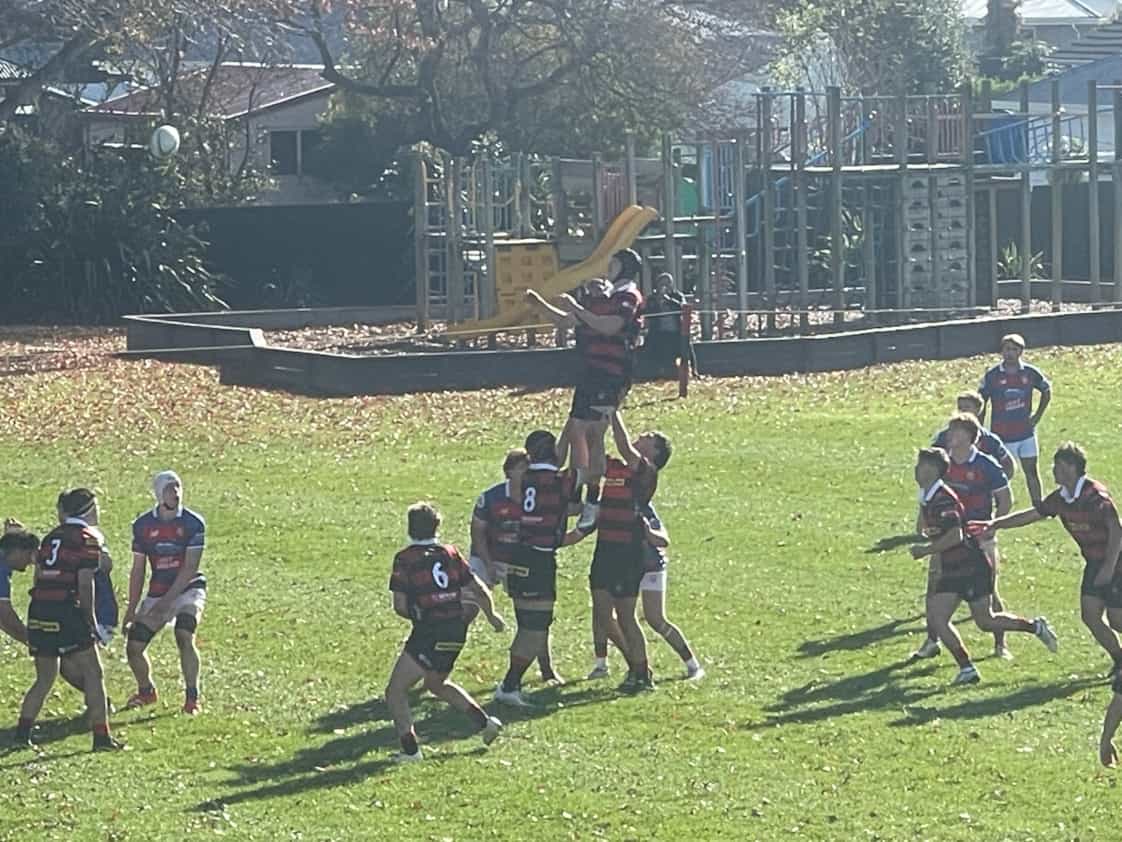
Rounds 1 & 2 Wrap-Up — The Season is Well and Truly Underway! What a fantastic start to the season! Our first two rounds of grading games have seen our teams spread right across Christchurch, and by all accounts it has been a brilliant couple of weekends of rugby. The weather has been kind to us, and the quality of rugby on display has been something to be really excited about as we head further into the season. |
|

On another exciting note, Monday Night Girls is up and running, and what a debut it has been! Our newest group of players have taken to the field with enormous enthusiasm and have been loving every minute of it. Watching new players discover their love of the game is one of the best things about our club, and we can't wait to see them continue to grow and develop as the season progresses. Welcome to the club, ladies — we're absolutely thrilled to have you! |
 |
|

Let's make sure every child — whether they're on our team or the opposition — feels supported and valued out on the field. Our sidelines should be a place of fun and enthusiasm, so let's lead by example and show what our club is all about. With two great rounds under our belts, the excitement is building nicely as we look ahead to Round 3. The grading process is heading towards its conclusion, so there is plenty to play for — let's finish the job and carry this fantastic momentum forward. Get out there, play hard, support your teammates, and most importantly — enjoy every moment of it. Give 'em the axe! 🪓 |
|


 |